Classic French Onion Soup: Rich and Caramelized
- Time: 20 min active + 100 min cooking
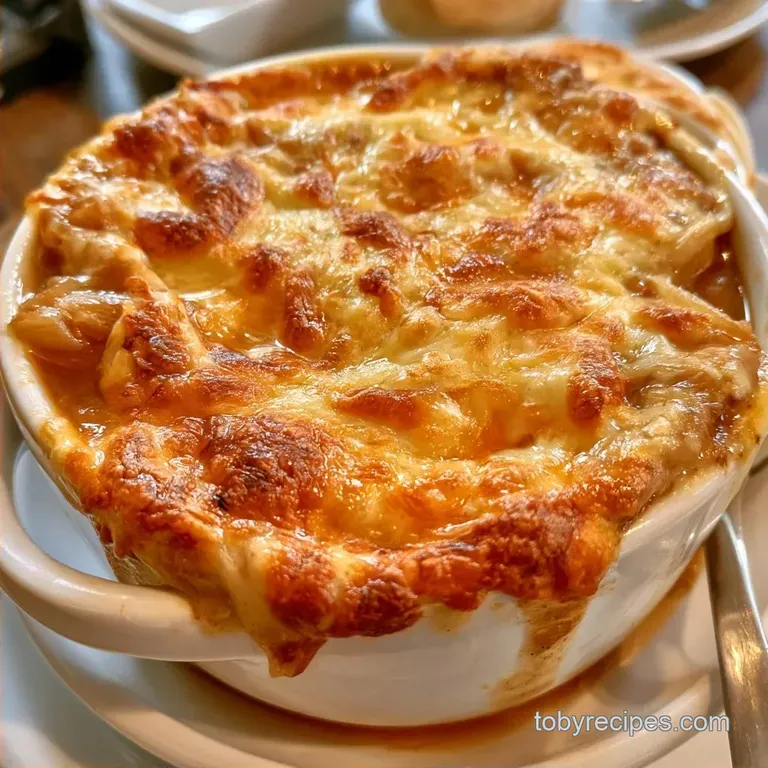
- Flavor/Texture Hook: Deep mahogany broth topped with a bubbly, golden-brown cheese crust
- Perfect for: A comforting, rainy-day meal for four
There is nothing quite like the aroma of onions sizzling in butter filling every room. I once believed that achieving that dark, restaurant quality color required a commercial kitchen or an entire afternoon of free time.
I even attempted to rush the process by turning up the heat, but I only succeeded in creating bitter, burnt pieces that tasted like charcoal.
In reality, you don't need formal training or a half day simmer to get this right. The secret is simply managing your pan's temperature. As long as you can commit to a quick stir every ten minutes, you've mastered the hardest part.
This version of French Onion Soup thrives on contrast. It pairs a salty, savory broth with tender onions and a crisp, shattered layer of toasted bread and melted cheese. It is a hearty, warming dish that remains remarkably easy as long as you stick to the clock.
Classic French Onion Soup
The trick here is the slow breakdown of the onions. By keeping the heat medium low, the natural sugars caramelize without burning, creating a thick, jammy base.
The Slow Brown: Lower heat prevents the onions from scorching and allows the sugars to develop a deep color. The Deglaze: Using white wine lifts the browned bits from the bottom of the pot, pulling all that concentrated flavor back into the liquid.
Recipe Specs
Right then, let's look at the timing and how this compares to other methods. Most people wonder if they can just throw this in the oven, but the stovetop gives you way more control over the color.
| Method | Heat Control | Risk of Burning | Texture |
|---|---|---|---|
| Stovetop | High | Moderate | Jammy & Consistent |
| Oven | Low | Low | Softer, less concentrated |
- - 15 minutes
- Onions should be translucent and soft, not brown.
- - 60 minutes
- Onions must hit a deep mahogany color.
- - 20 minutes
- The final simmer should thicken the broth slightly.
And if you're looking to tweak the result, use this quick guide:
| Goal | What to change |
|---|---|
| Thicker broth | Simmer 10 mins longer |
| Less salt | Use low sodium beef broth |
| Nuttier flavor | Add a pinch of nutmeg |
Gathering Your Essentials
You don't need a massive list of things for this, but the quality of the beef broth makes or breaks the dish. I prefer a rich, dark broth to keep the colors consistent.
- 5 large yellow onions, thinly sliced (approx. 1.35kg) Why this? Yellow onions have the best sugar to sulfur balance for browning.
- 4 tbsp unsalted butter (57g) Why this? Provides the rich base for caramelization.
- 2 tbsp olive oil (30ml) Why this? Raises the smoke point so butter doesn't burn.
- 1 tsp granulated sugar (5g) Why this? Helps the browning process start faster.
- 1 tsp kosher salt (6g)
- 1/2 tsp black pepper (1g)
- 6 cups beef broth (1.4L) Why this? The backbone of the soup's savory profile.
- 1/2 cup dry white wine (120ml) Why this? Adds acidity to cut through the richness.
- 3 cloves garlic, minced (15g)
- 2 sprigs fresh thyme (2g)
- 1 bay leaf
- 1 baguette, sliced into 1 inch rounds (approx. 340g)
- 2 cups Gruyère cheese, grated (225g) Why this? Melts beautifully with a nutty taste.
- 1/4 cup Parmesan cheese, grated (25g)
If you're missing something, don't panic. Use the table below to find a swap.
| Original Ingredient | Substitute | Why It Works |
|---|---|---|
| Gruyère Cheese | Swiss or Emmental | Similar melting point. Note: Slightly milder flavor |
| Dry White Wine | Beef Broth + 1 tsp Lemon Juice | Mimics acidity. Note: Lacks the fermented depth |
| Beef Broth | Mushroom Broth | Great for vegetarians. Note: Earthier, less "meaty" |
Equipment Needed
A heavy bottomed pot is a must here. I use a Dutch oven because it holds heat evenly, which stops the onions from hot spotting and burning in one corner.
- Large Dutch oven (cast iron is best)
- Sharp chef's knife for thin onion slices
- Baking sheet for the baguette
- Oven safe crocks or bowls (must handle broiler heat)
- Wooden spoon or silicone spatula for constant scraping
The Cooking Process

Let's crack on. The most important part is the browning, so don't try to rush it.
Melt the butter and olive oil in a Dutch oven over medium heat. Add the sliced onions and toss to coat, cooking for 10-15 minutes until they are translucent and soft. Note: Don't let them brown ; just soften them.
Stir in the sugar, salt, and pepper. Reduce heat to medium low and cook for 45-60 minutes, stirring every 10 minutes, until the onions reach a deep mahogany color. Note: If they stick too much, add a tablespoon of water to scrape up the brown bits.
Add minced garlic and cook for 1 minute until fragrant.
Pour in the white wine to deglaze the pot, scraping the bottom thoroughly with your spoon. Listen for the sizzle as the wine lifts the caramelized residue.
Stir in the beef broth, thyme, and bay leaf. Simmer on low for 20 minutes. Note: This allows the herbs to infuse without boiling over.
Remove the thyme sprigs and bay leaf before serving.
Toast baguette slices on a baking sheet until crisp and golden. Note: Toasting them first stops them from turning into mush instantly.
Ladle the soup into oven safe crocks. Top each serving with a toasted baguette slice and a generous portion of Gruyère and Parmesan cheese.
Place crocks under the broiler until the cheese is melted and bubbling brown.
How to Fix Common Problems
Even if you're careful, things can happen. Usually, it's a heat issue. If the onions look like they're turning black rather than brown, you've gone too high.
Preventing Burnt Onions
If you smell something acrid or see black edges, your pan is too hot. Immediately add two tablespoons of water or broth. This drops the temperature and lets you scrape up the burnt bits before they ruin the whole batch.
Stopping Soggy Bread
The bread acts as a raft for the cheese. If you use fresh, untoasted bread, it sinks and turns into a sponge. Always toast your rounds until they are hard throughout.
Fixing Overly Salty Broth
Some beef broths are salt bombs. If the Classic French Onion Soup tastes too salty after simmering, add a splash of water or a pinch of sugar to balance it out.
| Problem | Root Cause | Solution |
|---|---|---|
| Onions are bitter | Overcooked/Burnt | Start over or add a pinch of sugar |
| Cheese didn't brown | Broiler too low | Move crocks closer to the heating element |
| Broth is too thin | Not enough reduction | Simmer without a lid for 10 more mins |
Perfect Complements
Since this is a very rich dish, you want something fresh on the side to balance it. A crisp green salad with a sharp lemon vinaigrette works wonders.
If you're doing a full soup course, this pairs well with other comfort classics. For a lighter start, try a Creamy Squash Soup to introduce some sweetness before the salty punch of the onions.
Chef Note: To make the presentation look like a bistro, wipe the rims of your crocks before putting them under the broiler. It keeps the cheese from leaking down the sides.
Freezing and Reheating Guide
The soup is actually more flavorful the next day, as the sweetness of the onions deepens and the tastes meld together.
Fridge Storage: Store the soup (omitting the bread and cheese) in a sealed container for 4 days.
Freezing: The onion base and broth can be frozen for 3 months. Let it defrost in the refrigerator overnight before reheating.
Reheating: Warm the soup on the stovetop over medium heat. Once it starts to bubble, ladle it into bowls and add the bread and cheese. The toppings should never be frozen.
Zero Waste Tip: Gather onion skins and carrot or celery ends from other prep. Store these in a freezer bag and simmer them in water to create a basic vegetable stock for your next batch.
Dietary Adaptations
You can tweak this recipe to fit your needs without losing the vibe. If you want a version without wine, simply replace the white wine with an equal amount of beef broth and a teaspoon of lemon juice or apple cider vinegar.
For those avoiding meat, a Vegetarian French Onion Soup is totally doable. Use a rich mushroom broth instead of beef broth and add a dash of soy sauce or Worcestershire sauce (check for anchovies) for that umami hit. If you're looking for other plant based options, my Hearty Lentil Soup is another great winter warmer.
Making it gluten-free: Swap the baguette for a gluten-free toasted sourdough. Since GF bread can be denser, toast it slightly longer so it can support the weight of the Gruyère.
Alternative Cheeses: If you can't find Gruyère, a mix of sharp white cheddar and mozzarella gives you a similar stretch and saltiness, though you lose that specific nutty profile.
Classic French Onion Soup is a lesson in patience. Once you stop fighting the clock and let the onions do their thing, you'll realize it's one of the easiest things to make in your kitchen. Just keep stirring, watch for that mahogany glow, and enjoy the cheese pull.
Very High in Sodium
1400 mg 1,400 mg of sodium per serving (61% 61% of daily value)
The American Heart Association recommends an upper limit of 2,300 mg of sodium per day, with an ideal limit of 1,500 mg for most adults to reduce the risk of cardiovascular disease.
Tips to Reduce Sodium
-
Swap the Broth-30%
Replace the standard beef broth with low-sodium or no-salt added beef broth to significantly lower the base sodium content.
-
Eliminate Added Salt-25%
Remove the 1 tsp of kosher salt entirely; the natural sodium in the cheese and broth provides ample seasoning.
-
Modify the Cheese-15%
Reduce the amount of Gruyère and Parmesan, or substitute with a lower sodium Swiss cheese to cut down on processed dairy salts.
-
Enhance Aromatics
Increase the fresh thyme and minced garlic to boost the savory depth and flavor profile without adding any sodium.
Recipe FAQs
What goes into traditional French onion soup?
Yellow onions, beef broth, and a blend of Gruyère and Parmesan. These are paired with butter and wine for a savory base, similar to the aromatic depth in our red pepper soup.
Which ingredient helps the onions caramelize?
Granulated sugar. A small amount helps the sliced onions reach a deep mahogany color more efficiently.
Why is the cooking process so slow?
Patience prevents burning. Cooking onions on medium low for 45 60 minutes allows the natural sugars to caramelize into a jammy consistency without scorching.
Is it true that French onion soup is just a way to recycle old bread?
Actually, no. Toasted baguette slices provide a necessary structural base that keeps the melted cheese from sinking into the broth.
How to stop the onions from sticking?
Stir the onions every 10 minutes and add a tablespoon of water if they begin to cling too much to the pot.
Can I swap the cheese topping?
Stick with Gruyère and Parmesan. These specific cheeses provide the traditional nutty flavor and the optimal melting point for a bubbly crust.
Does the wine serve a purpose other than flavor?
It deglazes the pot. The white wine lifts the browned bits from the bottom of the Dutch oven to incorporate concentrated flavor back into the liquid.
When should the broiler be used?
Broil the crocks at the very end. This quickly melts the cheese and creates the signature bubbling brown top.
Classic French Onion Soup