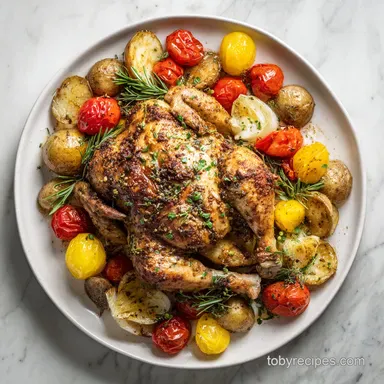
One Pan Roasted Chicken and Vegetables
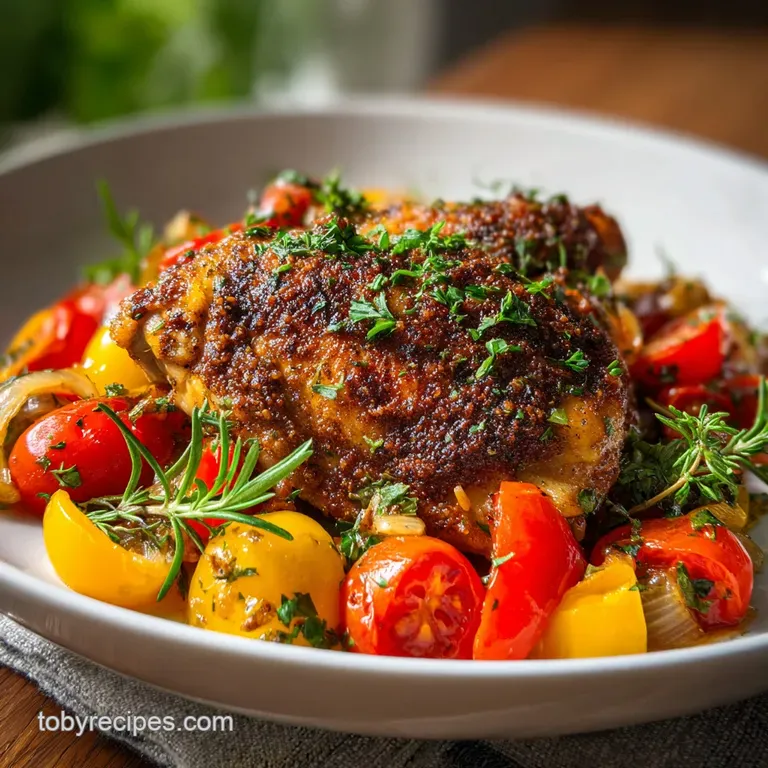
- Time: Active 15 minutes, Passive 40 minutes, Total 55 minutes
- Flavor/Texture Hook: Shatter crispy chicken skin and velvety, fat roasted potatoes
- Perfect for: Stress free weeknight dinners or simple meal prep
- Mastering This Easy One Pan Roasted Chicken Dinner
- Why Sheet Pan Dinners Fail
- Essential Cooking Metrics
- The Fresh Ingredient List
- Tools For The Job
- The Step By Step Method
- Fixing Soggy Results
- Scaling Your Meal
- Common Kitchen Myths
- Storage And Leftover Tips
- The Finishing Touches
- Recipe FAQs
- 📝 Recipe Card
Mastering This Easy One Pan Roasted Chicken Dinner
You know that specific sound when you pull a tray out of the oven and the chicken fat is still bubbling and singing against the metal? That's the sound of a Tuesday night being saved.
I remember the first time I really got this right, I was standing in my kitchen with flour on my face from some other project, starving, and just threw everything onto a single sheet pan.
When I bit into a potato that had basically been deep fried in chicken fat, I knew I could never go back to boring, separate side dishes.
The air in the kitchen completely changes when the rosemary and garlic start hitting that 425°F heat. It’s a woody, savory aroma that makes you want to hang out by the oven door like a hungry puppy.
This isn't just about throwing food on a pan, it's about the way the chicken juices run down and season the carrots and onions, turning them into these jammy, caramelized bites that are honestly just as good as the meat itself.
We are going for a very specific result here. I want your chicken skin to have a literal shatter when you bite it, and I want those potatoes to be soft on the inside but golden and crusty on the outside. We've all had those soggy, sad sheet pan meals where everything just steams together in a pile of grey mush.
We are not doing that today. Let's get into how we actually make this happen without overcomplicating your life.
Why Sheet Pan Dinners Fail
Most people treat their oven like a microwave and just hope for the best, but the real secret to an easy one pan roasted chicken dinner is managing moisture. If your vegetables are too crowded, they release steam, and steam is the mortal enemy of crispy skin.
By giving every ingredient its own little zip code on the pan, the dry heat of the oven can actually do its job.
- Schmaltz Seasoning: The rendering chicken fat (schmaltz) drips onto the vegetables, acting as a high flavor roasting medium that oil alone cannot replicate.
- Thermal Contact: Using a metal sheet pan allows for direct heat transfer to the bottom of the potatoes, creating a crust while the top roasts in the air.
- Skin Dehydration: High heat (425°F) evaporates surface moisture on the chicken skin rapidly, which is the only way to achieve that paper thin, crispy texture.
- Aromatic Infusion: Smashed garlic and rosemary sprigs release oils that are carried by the chicken fat, coating every single carrot and onion wedge.
| Method | Time | Texture | Best For |
|---|---|---|---|
| Stovetop Searing | 25 minutes | Extremely crusty but uneven | Small batches of meat only |
| Traditional Oven Roast | 40 minutes | Evenly cooked and juicy | Whole meals with vegetables |
| Air Fryer | 20 minutes | Very crispy but small capacity | 1-2 people max |
It is important to remember that the oven is a dry heat environment. If you add too much lemon juice or watery vegetables, you’ll end up with a braise rather than a roast. We want that dry, intense heat to lick the edges of the red onions until they turn dark and sweet, almost like candy.
Trust me, those little burnt bits of onion are the best part of the whole tray.
Essential Cooking Metrics
When I first started roasting, I used to just "eyeball it," which usually led to raw chicken or burnt carrots. Now, I live by the meat thermometer. For this recipe, we are looking for a few specific checkpoints to ensure everything hits the table at the exact same time without anyone getting food poisoning or a chipped tooth on a hard potato.
| Component Analysis | Science Role | Pro Secret |
|---|---|---|
| Chicken Thighs | Fat source | Use bone in to prevent the meat from drying out at high heat. |
| Yukon Gold Potatoes | Starch structure | The thin skin doesn't need peeling and crisps up faster than Russets. |
| Lemon Juice | Acid balance | Breaks down tough fibers in carrots and cuts through the heavy chicken fat. |
| Smoked Paprika | Color/Sugar | Provides a deep red hue and a hint of char flavor without a grill. |
The chicken thighs are the engine of this dish. Unlike breasts, which turn into sawdust if you look at them wrong, thighs are incredibly forgiving. They have enough internal fat to stay velvety even if you leave them in for an extra five minutes while you're hunting for a clean set of tongs.
That extra fat is also what makes the potatoes taste so decadent, so please, don't try to swap these for boneless, skinless cuts unless you want a very different (and sadder) dinner.
The Fresh Ingredient List
Right then, let's look at what we’re working with. I’ve kept this list tight because nobody wants to go to three different grocery stores on a Tuesday. We are using 1.5 lb bone in skin on chicken thighs, which is usually about four good sized pieces.
If your thighs are massive, you might only get three, but the weight is what matters for the cook time.
- 1.5 lb bone in skin on chicken thighs Why this? The bone conducts heat internally while the skin provides essential roasting fat.
- Substitute: Drumsticks work great, but reduce the cook time by 5 minutes.
- 1 lb baby Yukon Gold potatoes, halved Why this? They hold their shape perfectly and have a buttery, creamy interior.
- Substitute: Red bliss potatoes or even chopped sweet potatoes.
- 2 large carrots, cut into 1 inch chunks Why this? Carrots add a necessary sweetness to balance the salty, savory chicken.
- Substitute: Parsnips or thick asparagus spears (add asparagus in the last 15 mins).
- 1 large red onion, cut into 1/2 inch wedges Why this? Red onions caramelize beautifully and turn jammy in the oven.
- Substitute: Shallots or a yellow onion, though red is prettier.
- 4 cloves garlic, smashed Why this? Smashing releases the oils without letting the garlic burn as easily as mincing.
- Substitute: 1 tsp garlic powder mixed into the oil.
- 2 sprigs fresh rosemary Why this? It's a hardy herb that can stand up to 40 minutes of intense heat.
- Substitute: Fresh thyme or 1 tsp dried rosemary.
- 3 tbsp extra virgin olive oil Why this? It carries the spices and helps the heat distribute evenly across the vegetables.
- Substitute: Avocado oil or melted ghee.
- 1 tbsp fresh lemon juice Why this? The acid brightens the heavy flavors and helps brown the chicken skin.
- Substitute: Apple cider vinegar.
- 1 tsp smoked paprika Why this? Adds a "cooked over fire" vibe and a gorgeous mahogany color.
- Substitute: Regular sweet paprika or a pinch of chipotle powder.
- 1 tsp dried oregano Why this? Adds an earthy, Mediterranean floral note that pairs with the rosemary.
- Substitute: Dried marjoram or Italian seasoning.
- 1.5 tsp kosher salt Why this? Essential for drawing out moisture from the skin and seasoning the meat deeply.
- Substitute: 1 tsp fine sea salt.
- 1/2 tsp cracked black pepper Why this? Provides a sharp, biting heat to contrast the sweet carrots.
- Substitute: White pepper for a more subtle heat.
Tools For The Job
You don't need a professional kitchen for this, but the quality of your pan actually matters. I used to use those thin, flimsy pans from the dollar store, and they would "pop" and warp in the heat, sending half my carrots flying. A heavy duty, rimmed half sheet pan is your best friend here.
It stays flat, distributes heat evenly, and has enough surface area to prevent that dreaded steaming effect.
I also highly recommend a large mixing bowl for tossing everything. I’ve tried seasoning things directly on the pan to save a dish, but you never get the oil into all the nooks and crannies that way.
A big bowl allows you to really massage the spices and lemon juice into every piece of chicken and every potato half. Also, grab a pair of sturdy tongs and a reliable meat thermometer. If you don't have a thermometer, get one! It’s the difference between "is this done?" anxiety and "this is perfect" confidence.
The step by step Method
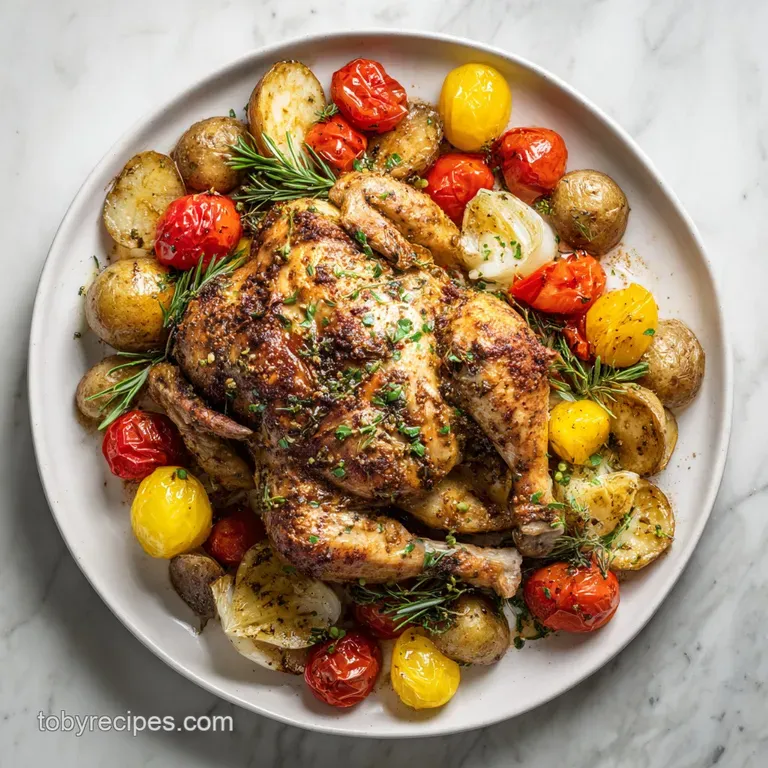
Let's get cooking. The sequence here is designed to maximize the crunch while keeping the prep time under that 15 minutes mark.
- Preheat your oven to 425°F (220°C). Note: A fully hot oven is non negotiable for crispy skin.
- Pat the chicken thighs bone dry with paper towels. Note: Moisture on the skin creates steam, which leads to rubbery results.
- In a large mixing bowl, whisk together the olive oil, lemon juice, smoked paprika, oregano, salt, and pepper.
- Toss the potatoes, carrots, and onions in the oil mixture. Roast until the vegetables are glistening and fully coated.
- Place the seasoned vegetables onto the large rimmed sheet pan in a single layer.
- Toss the chicken thighs in the remaining oil in the bowl. Ensure the skin side is well coated.
- Nestle the chicken among the veggies, skin side up. Note: Don't put the veggies on top of the chicken or the skin won't crisp.
- Scatter the smashed garlic and rosemary sprigs over the top.
- Roast for 40 minutes until the chicken skin is golden and the potatoes are soft.
- Check the chicken with a thermometer; it should read 165°F (74°C). Listen for the sizzle as it comes out.
Chef's Tip: If the chicken is done but the skin isn't as dark as you'd like, flick the broiler on for 2 minutes at the very end. Just stay right there and watch it, because it goes from "perfect" to "charcoal" in about thirty seconds.
Fixing Soggy Results
If you've ever pulled a sheet pan out of the oven only to find a pool of liquid at the bottom, don't panic. This usually happens if the vegetables were still wet from washing or if you used a pan that was way too small.
When the ingredients are packed too tightly, the air can't circulate, and the whole thing basically boils in its own juices.
Soft Chicken Skin
This is usually caused by leftover moisture. Even if the chicken looks dry, pat it again. Also, make sure you aren't covering the pan with foil. Foil traps steam and will give you the softest, saddest skin imaginable. We want that direct, dry heat to hit the surface and turn the fat into a crispy lattice.
Burnt Vegetable Edges
If your onions are turning black while the chicken is still raw, your wedges might be too thin. Next time, cut the onion into thicker 1/2 inch wedges. If it's happening right now, just tuck the onions under a piece of chicken to shield them from the direct heat for the last 10 minutes.
| Problem | Root Cause | Solution |
|---|---|---|
| Potatoes are hard | Pieces are too large | Cut them into smaller halves or quarters next time. |
| Chicken is dry | Overcooked or skinless | Use bone in thighs and pull at exactly 165°F. |
| Vegetables are mushy | Overcrowded pan | Use a larger pan or two separate pans for better airflow. |
- ✓ Pat the chicken bone dry with paper towels before seasoning.
- ✓ Ensure the oven is fully preheated to 425°F before the pan goes in.
- ✓ Do not crowd the pan; leave space between the chicken and the veggies.
- ✓ Use a rimmed sheet pan to catch the rendering chicken fat.
- ✓ Let the chicken rest for 5 minutes before serving to keep it juicy.
Scaling Your Meal
This recipe is very easy to adjust depending on how many people you're feeding. If you're cooking for two, just halve everything and use a smaller quarter sheet pan. The cook time will stay roughly the same because the thickness of the chicken and potatoes hasn't changed, but keep an eye on it around the 30 minute mark.
If you are scaling up for a crowd, do not just pile more food onto one pan. You will need two separate sheet pans. Put one on the middle rack and one on the bottom rack, then swap their positions halfway through the 40 minutes.
This ensures both pans get equal access to the intense heat at the top of the oven. If you double the recipe, only increase the spices by about 1.5 times, as salt can become overwhelming when doubled literally.
| Premium | Budget | Flavor Impact | Savings |
|---|---|---|---|
| Fresh Rosemary | Dried Rosemary | Slightly less aromatic but still woody | Save $2-3 |
| Extra Virgin Olive Oil | Vegetable Oil | Less "grassy" flavor but higher smoke point | Save $5 per bottle |
| Baby Yukon Golds | Russet Potatoes | Grainier texture but still delicious | Save $1-2 per lb |
Common Kitchen Myths
There is a big misconception that you need to sear the chicken in a pan before roasting it to "lock in the juices." Honestly, that's just an extra dish to wash. over High heat roasting (425°F) does a fantastic job of browning the skin while the internal temperature rises.
You get plenty of flavor without the stovetop splatter.
Another myth is that you should always peel your carrots and potatoes. For this easy one pan roasted chicken dinner, I actually recommend keeping the skins on. The skin of the Yukon Gold and the carrot adds a rustic texture and prevents the vegetables from turning into mush.
Just give them a good scrub with a vegetable brush and you're good to go.
Storage And Leftover Tips
If you have leftovers, you're in luck. This is one of those rare meals that tastes just as good the next day. Store everything in an airtight container in the fridge for up to 4 days. When you go to reheat it, avoid the microwave if you can. The microwave will make the chicken skin rubbery.
Instead, toss it back on a pan or in an air fryer at 350°F for about 10 minutes until it's warmed through and the skin crisps back up.
For zero waste, don't throw away those chicken bones or the rosemary stems. Toss them into a freezer bag. Once you have a few batches' worth, you can boil them with some water and vegetable scraps to make a rich, homemade chicken stock. Even the leftover onion skins can go into the stock pot for a deeper golden color.
The Finishing Touches
When you finally pull that pan out of the oven, give it a minute. I know it smells incredible, but letting the chicken rest for about 5 minutes allows the juices to redistribute. If you cut into it immediately, all that moisture will just run out onto the pan, leaving you with dry meat.
I like to finish the whole tray with a tiny bit more fresh lemon zest or a sprinkle of flaky sea salt if I'm feeling fancy. It’s a simple, honest meal that feels like a hug in a bowl. You’ve got the starch, the veg, and the protein all in one go, seasoned by the magic of rendering fat and high heat.
It’s brilliant, it’s easy, and it’s going to be your new weeknight favorite. Enjoy that first crispy bite!
Recipe FAQs
How to ensure the chicken skin gets crispy?
Pat the chicken thighs bone dry with paper towels before seasoning. This removes excess moisture, allowing the skin to crisp effectively while roasting at 425°F.
Is it necessary to use a rack to keep the vegetables from getting soggy?
No, this is a common misconception. Simply ensure no ingredients overlap on the rimmed sheet pan to allow proper airflow and even roasting for both the chicken and vegetables.
How to reheat leftovers without making the skin rubbery?
Place the leftovers on a pan or in an air fryer at 350°F for 10 minutes. Avoiding the microwave is key to regaining that crispy texture on the chicken skin.
How long can I store the leftovers in the refrigerator?
Store your leftovers in an airtight container for up to 4 days. The flavors often deepen by the next day, making it an excellent meal prep option.
Is it true I should flip the chicken halfway through the cooking time?
No, keep the chicken skin side up for the entire 40 minutes. This position is essential to achieve a perfectly golden, crispy top while the vegetables roast underneath.
How to tell when the chicken is fully cooked?
Use a meat thermometer to check that the chicken reaches an internal temperature of 165°F. At this point, the vegetables should also be tender and golden brown.
How to prevent the garlic from burning during the 40-minute roast?
Keep the garlic cloves smashed rather than minced. The larger pieces are better protected from high heat and will infuse the pan with flavor without burning.
One Pan Roasted Chicken