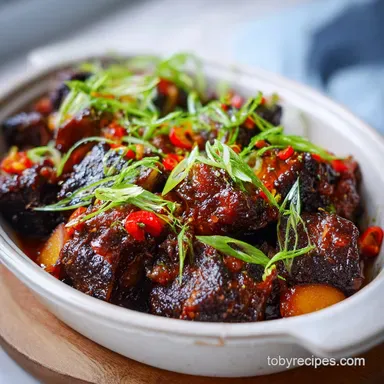
Slow Cooker Short Ribs: Rich and Tender
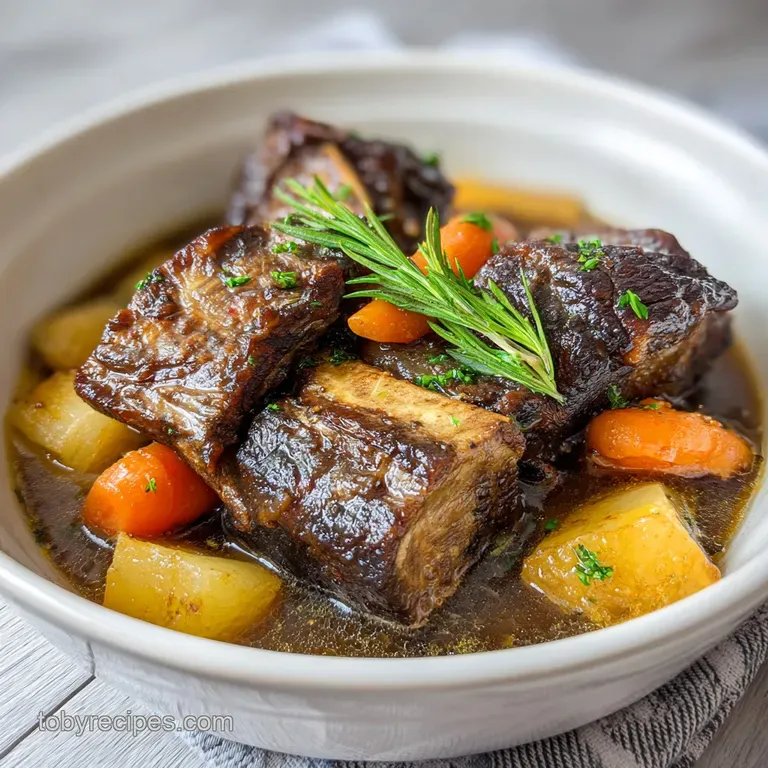
- Time:20 minutes active + 8 hours slow cooking = 500 minutes total
- Flavor/Texture Hook: Deeply savory with a velvety, melt in-your mouth beef texture
- Perfect for: Stress free Sunday family dinners or impressive winter entertaining
- Master the Best Slow Cooker Short Ribs
- Essential Recipe Timing and Specs
- Essential Flavor and Texture Components
- Required Kitchen Gear and Tools
- Complete Step by Step Guide
- Expert Tips and Success Strategies
- Creative Variations and Flavor Swaps
- Storage and Waste Reduction Guide
- Serving Ideas and Perfect Pairings
- High in Sodium
- Recipe FAQs
- 📝 Recipe Card
Master the Best Slow Cooker Short Ribs
The moment that heavy cast iron skillet hits the heat and you drop the first seasoned rib into the shimmering oil, the kitchen transforms. There’s this specific, aggressive sizzle a sound that promises a deep, mahogany crust is forming.
That aroma of browning beef, mixed with the sharp scent of cracked black pepper, is enough to bring anyone wandering into the kitchen asking, "When is dinner?" It’s a sensory ritual that starts with a roar and ends, eight hours later, with the softest, most tender beef imaginable.
I remember the first time I tried making these for a big family gathering. I was so worried about them being tough or greasy, but the beauty of using a crockpot is that time does all the heavy lifting for you.
You do the hard work in the first twenty minutes the searing, the sautéing, the deglazing and then you just walk away. By the time the sun starts to set, the house smells like a high end French bistro, and the meat is literally falling away from the bone at the mere suggestion of a fork.
We’ve all had those days where we want a meal that feels special without having to stand over a stove for three hours. This dish is exactly that. It’s elegant enough for a holiday but simple enough that you can prep it in your pajamas on a rainy Saturday morning.
Trust me, once you see that velvety sauce glistening over a mountain of mashed potatoes, you’ll never want to cook short ribs any other way. We're going for deep flavor and foolproof results here, so let's get into why this method actually works.
Essential Recipe Timing and Specs
The Long Game: Slow cooking at a low temperature for a full 8 hours is the secret to converting the tough connective tissue of the rib into rich, silky gelatin.
If you try to rush this on high heat for 4 hours, it will be "done," but it won't have that signature "shatter at-a touch" texture we’re after.
Collagen Transformation: The beef short ribs we are using are packed with collagen. Unlike a lean steak, this meat needs sustained heat to break down. This process doesn't happen quickly; it’s a marathon, not a sprint, which is why the slow cooker is the undisputed king of this specific cut.
Flavor Extraction: By searing the meat first, we create a layer of caramelized proteins on the surface. When these ribs simmer in the bone broth and red wine for hours, that crust dissolves back into the liquid, creating a sauce with incredible depth and a savory punch that you just can't get from raw meat.
Atmospheric Pressure: The sealed environment of the cooker traps all the moisture inside. This means the ribs are essentially poaching in a combination of their own fat, the wine, and the beef bone broth, ensuring they never dry out despite the long cooking time.
| Feature | Fresh Method | Shortcut Method | Impact on Outcome |
|---|---|---|---|
| Searing Step | 15 mins browning | Skip searing | Searing adds deep color and savory complexity |
| Aromatic Base | Fresh diced mirepoix | Onion/Garlic powder | Fresh veggies provide texture and natural sweetness |
| Liquid Base | Wine and bone broth | Water and bouillon | Bone broth adds a richer, more velvety mouthfeel |
Choosing the right approach depends on your schedule, but even when I'm in a rush, I never skip the sear. That mahogany crust is where the soul of the dish lives. If you find yourself frequently using your crockpot for these types of hearty meals, you might also enjoy the process of making Slow Cooker Baby Back Ribs which uses a similar low and slow philosophy but with a different flavor profile.
Essential Flavor and Texture Components
The choice of ingredients here isn't just about what's in the pantry; it's about how they interact over the course of eight hours. Each element has a specific job to do in that ceramic pot.
| Ingredient | Science Role | Pro Secret |
|---|---|---|
| Short Ribs | Structural Protein | Choose English cut ribs with visible white fat marbling for maximum tenderness. |
| Tomato Paste | Umami Booster | Sauté it until it turns rust colored to remove the raw metallic taste. |
| Balsamic Vinegar | Acid Balance | The acidity cuts through the heavy fat, brightening the entire flavor profile. |
| Bone Broth | Liquid Body | Rich in natural gelatin, it helps the sauce become naturally thick and glossy. |
The interaction between the red wine and the balsamic vinegar is particularly interesting. While the wine provides the classic braising backbone, the vinegar adds a fermented depth that mimics the flavor of a sauce that has been aging for days.
This balance of fat, salt, and acid is what makes the final result taste so balanced.
Required Kitchen Gear and Tools
One of the best things about this recipe is that it doesn't require a kitchen full of gadgets. I'm a big fan of minimal tool cooking because, let's be honest, nobody wants to do a mountain of dishes after a big meal. You really only need two main pieces of equipment to make this happen.
First, you need a heavy bottomed skillet. I swear by my 12 inch cast iron skillet for the searing phase. Cast iron holds heat like nothing else, which is vital for getting that dark, crispy crust on the beef without steaming the meat.
If you use a thin pan, the temperature will drop the second the cold ribs hit the surface, and you'll end up with grey, boiled looking meat instead of that gorgeous mahogany brown.
Second, you need a 6 quart or 7 quart slow cooker. Since we are working with 4.5 lbs of bone in beef short ribs, you need enough space for the ribs to sit comfortably without being jammed together. They don't need to be fully submerged in liquid, but they do need enough room for the steam to circulate.
A fine mesh strainer is also a "nice to have" for the final step it’s the difference between a rustic home style sauce and a silky, restaurant grade finish.
Chef's Tip: If you don't have a fine mesh strainer, you can use a large spoon to skim the fat off the top after the ribs are done. Just let the liquid sit for 5 minutes; the oil will rise to the top, making it easy to scoop away.
Complete step by step Guide
- Dry the beef. Pat the 4.5 lbs bone in beef short ribs completely dry with paper towels. Note: Excess moisture creates steam, which prevents the meat from browning properly.
- Season heavily. Rub the 2 tsp kosher salt and 1 tsp cracked black pepper onto all sides of the ribs.
- Sear the ribs. Heat 2 tbsp avocado oil in a skillet over medium high heat. Brown the ribs in batches for 2-3 minutes per side until a dark mahogany crust forms.
- Sauté aromatics. Toss the diced onion, sliced carrots, and celery into the same skillet. Cook for 5-7 minutes until they soften and the onion turns translucent.
- Cook the paste. Stir in the 5 smashed garlic cloves and 2 tbsp tomato paste. Sauté for 2 minutes until the paste smells sweet and looks dark red.
- Deglaze the pan. Pour in 1 cup dry red wine and 2 tbsp balsamic vinegar. Scrape the bottom of the pan until all the browned bits (fond) are incorporated.
- Assemble the pot. Place the seared ribs in the slow cooker and pour the veggie wine mixture over them.
- Add liquids and herbs. Pour in the 2 cups beef bone broth and add the thyme, rosemary, and bay leaves.
- Slow cook. Cover and cook on Low for 8 hours until the meat is fork tender and falling off the bone.
- Final sauce. Remove the ribs and herbs. Skim the fat from the surface and strain the liquid until you have a silky, clear sauce.
Expert Tips and Success Strategies
When you're dealing with a cut as fatty as short ribs, the biggest challenge is often managing the oil. If you find your sauce is looking a bit too shiny, don't panic. The best way to handle this is to make the dish a day in advance.
When the pot cools in the fridge, the fat solidifies into a hard white layer on top that you can literally just lift off with a fork. It leaves behind a perfectly lean, flavor packed jus.
Searing for Maximum Flavor
The "Hard Sear" is non negotiable. I used to think it was just about color, but it’s actually about creating new flavor compounds. Don't crowd the pan! If you put all the ribs in at once, they will release their juices and boil. Do them in two or three batches to keep that skillet screaming hot.
You want to see a deep, dark brown, almost like the color of an old penny.
Breaking Down Tough Collagen
The 8 hour mark is the sweet spot. People often ask if they can do it in 6, but there is a physical change that happens in those last two hours. The meat goes from "chewy" to "yielding." You want to be able to press the meat with the back of a spoon and see it separate into individual fibers without any resistance.
Aromatics for Depth
Don't rush the onion and carrot sauté. You aren't just softening them; you're evaporating their water content to concentrate their sugars. This provides a natural sweetness that balances the salt and the heavy tannins from the red wine. If you want a fun variation for a different night, you could even serve these ribs alongside a Creamy Tomato Pasta Bake if you want to double down on the comfort food vibes.
| Problem | Root Cause | Solution |
|---|---|---|
| Tough Meat | Not enough time | Cook for another 30-60 mins; the collagen hasn't melted yet. |
| Greasy Sauce | Too much rendered fat | Skim with a spoon or chill the sauce to remove the fat cap. |
| Bland Flavor | Under seasoned | Add a splash more balsamic or a pinch of salt at the very end. |
Every cook makes mistakes, but with beef short ribs, most errors are easily fixed with either more time or a little extra seasoning. If the sauce feels thin, you can even simmer it in a saucepan on the stove for 10 minutes after straining it to reduce and thicken it into a glaze.
Common Mistakes Checklist
- ✓ Never skip drying the meat; wet meat won't sear, it will only steam.
- ✓ Use a high smoke point oil like avocado or grapeseed, not butter, for the sear.
- ✓ Don't peek! Every time you lift the slow cooker lid, you lose about 15-20 minutes of heat.
- ✓ Season the meat before searing, not just the liquid, to build flavor layers.
- ✓ Ensure you scrape the "fond" (brown bits) from the skillet; that is pure flavor gold.
Creative Variations and Flavor Swaps
While the red wine and balsamic version is a classic, you can easily pivot this recipe to suit different moods. For a "Keto Beef Short Ribs" version, simply ensure your wine is very dry (like a Cabernet) and skip the carrots if you are being extremely strict, though the small amount used here usually fits within most low carb macros.
You can also swap the balsamic for apple cider vinegar and the wine for more broth if you prefer a non alcoholic version.
If you are scaling this recipe down for a smaller household, you can easily halve the ingredients. Just make sure you use a smaller slow cooker (like a 3 quart) so the liquid level is high enough to properly braise the meat.
For a larger crowd, you can double the meat to 9 lbs, but don't double the liquid only increase the broth and wine by about 50%. The meat releases its own juices, and too much liquid will result in a diluted sauce.
| Original Ingredient | Substitute | Why It Works |
|---|---|---|
| Dry Red Wine | Beef Broth + 1 tbsp Vinegar | Provides acidity and depth without the alcohol content. |
| Avocado Oil | Grapeseed Oil | Both have high smoke points, allowing for a hard sear without burning. |
| Fresh Thyme | Dried Thyme (1 tsp) | Same herbal notes, though slightly less bright than fresh. |
Storage and Waste Reduction Guide
These ribs are actually better the next day. You can store the meat and the sauce together in an airtight container in the fridge for up to 4 days. When you're ready to eat, reheat them slowly in a covered pot on the stove or back in the slow cooker.
This gives the meat a chance to reabsorb some of that flavorful sauce as it warms up.
For freezing, remove the bones first. The meat and sauce can be frozen together in a freezer safe bag for up to 3 months. When it comes to zero waste, don't you dare throw away those leftover bones or the veggie scraps!
You can toss the bones back into a pot with water and some apple cider vinegar to make a fantastic homemade bone broth. The strained out carrots and onions from the sauce can be blended into a vegetable soup or mixed into a shepherd’s pie filling for a massive flavor boost.
Serving Ideas and Perfect Pairings
The classic way to serve these is over a bed of buttery mashed potatoes. You want something that can act as a sponge for that incredible red wine sauce. If you want something a bit more "bistro style," try serving them over creamy polenta or even wide egg noodles.
The wide surface area of the noodles is perfect for catching every drop of the jus.
For a lighter side, a simple arugula salad with a lemon vinaigrette provides a much needed sharp contrast to the richness of the beef. If you're looking for more inspiration for hearty, low carb family meals, you might find my Low Carb Taco Casserole helpful for your weeknight planning, as it focuses on those same deep, savory flavors with much less prep time.
The Classic Pairing
You honestly can't beat garlic mashed potatoes. I like to fold in a little sour cream and plenty of butter to make them extra decadent. The way the dark sauce pools in the center of the potatoes is pure food photography goals, and the flavors are a match made in heaven.
The Bistro Style
If you want to feel fancy, serve the ribs over cauliflower mash or a parsnip puree. Garnish with a little extra fresh thyme and maybe some finely diced parsley to give it a pop of color. It looks like a $40 plate from a downtown restaurant but cost you significantly less to make at home.
No matter how you serve it, the star of the show will always be that perfectly tender, slow cooked beef.
High in Sodium
945 mg 945 mg of sodium per serving (41% 41% of daily value)
The American Heart Association recommends limiting sodium intake to no more than 2,300mg per day.
Tips to Reduce Sodium
-
Use Low-Sodium Broth-30%
Replace the standard beef bone broth with a low-sodium or no-salt added version. This is often the biggest contributor to sodium in braised dishes.
-
Reduce Added Salt-25%
Cut the initial 2 tsp of kosher salt by half or more. You can always add a pinch more at the table if needed, but it's hard to remove excess sodium once it's in the dish.
-
Check Wine and Balsamic Vinegar-5%
While generally lower in sodium, some wines and balsamic vinegars can still contribute. Look for brands with lower sodium content if available.
-
Boost Flavor with Herbs & Spices
Leverage the fresh thyme, rosemary, and cracked black pepper. These aromatics add significant flavor without adding sodium, allowing you to rely less on salt.
-
Enhance with Vegetables
The onion, carrots, celery, and garlic provide natural sweetness and depth of flavor. Ensure they are well browned to maximize their contribution.
Recipe FAQs
Can you cook short ribs in a slow cooker?
Yes, the slow cooker is an excellent method for this cut. The gentle, consistent heat breaks down the connective tissue in bone-in beef short ribs over several hours, resulting in fork tender meat.
Are short ribs better in the oven or slow cooker?
The slow cooker offers more convenience for hands off cooking. While the oven provides a different texture for the sauce, the slow cooker excels at maintaining a steady temperature for the 8 hours required to render the meat perfectly.
How long do short ribs take in a slow cooker on high?
Set your slow cooker to High for 4 hours. This timeframe is sufficient for the meat to become fork tender and begin pulling away from the bone.
What are some common mistakes when slow cooking short ribs?
Skipping the sear is the most common error. Failing to brown the meat in a skillet first deprives the dish of the deep, savory mahogany crust that provides the base flavor for your sauce.
Why is it necessary to deglaze the skillet with wine?
Deglazing releases the fond, which is the flavorful browned bits stuck to the bottom of the pan. If you enjoyed mastering this flavor building technique here, see how the same principle works in our fluffy pancake recipe to understand how crust formation drives taste.
Can I keep these short ribs for later?
Yes, they are actually better the next day. You can store the ribs and sauce in an airtight container for up to 4 days in the refrigerator or remove the bones and freeze the mixture for up to 3 months.
Is it required to strain the sauce before serving?
No, straining is optional but recommended. While the vegetables and aromatics add great flavor, running the liquid through a fine mesh strainer creates a much silkier, restaurant quality finish for your plating.
Slow Cooker Short Ribs